Role
Impact
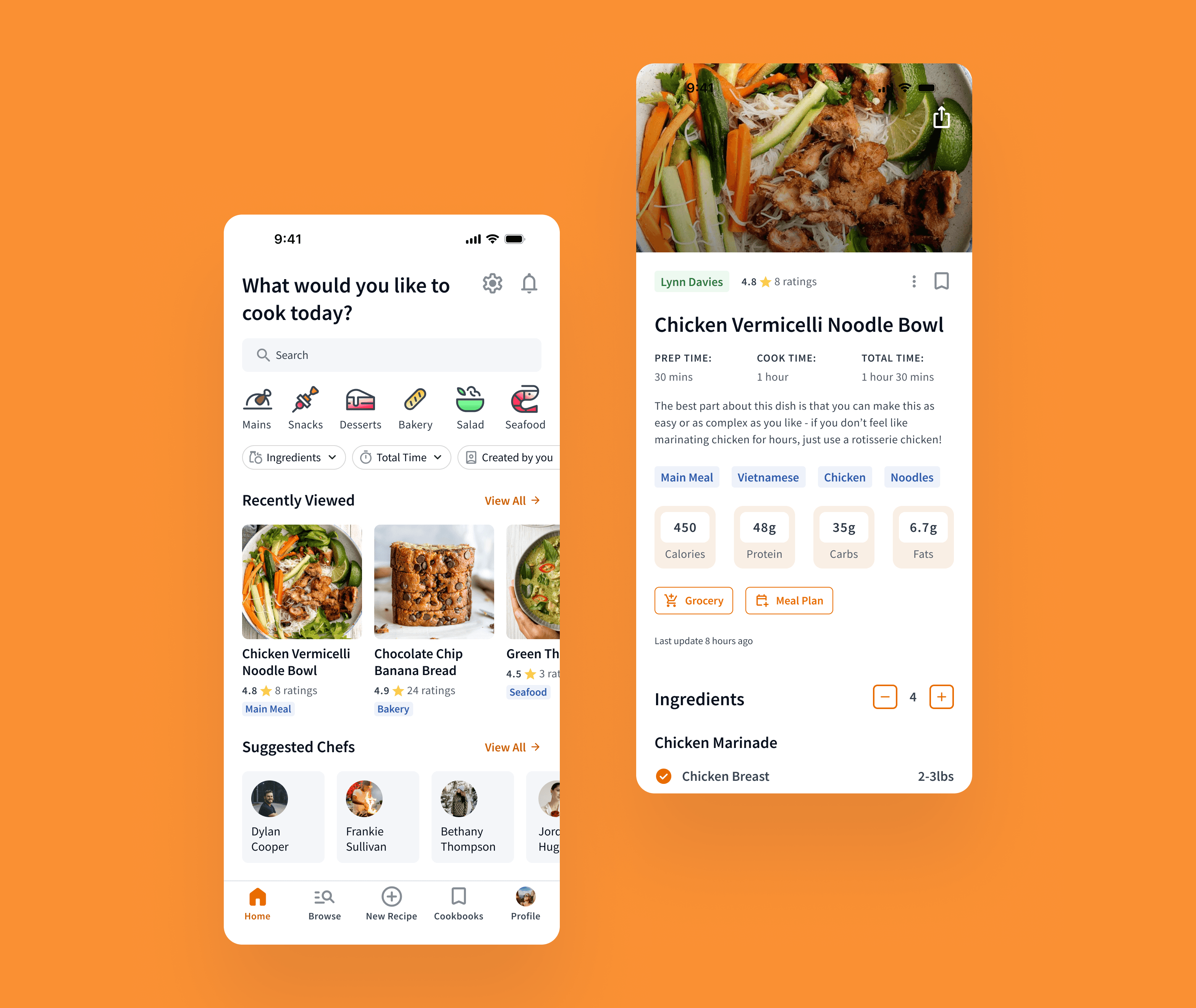
Overview
Cooking today is fragmented. Recipes live across screenshots, social media, notes, and multiple apps, creating friction in moments that should feel simple.
This project rethinks the cooking experience as a connected system, where discovering, creating, planning, and sharing recipes happen seamlessly in one place.
Problem
Home cooking today is highly fragmented. Users manage recipes, meal planning, and grocery shopping across disconnected tools and formats, ranging from social media and notes to dedicated apps which creates friction across the entire workflow.
As a result, core tasks that should feel simple become inefficient:
Recipes are difficult to organize and retrieve
Meal planning is inconsistent and time consuming
Grocery shopping lacks alignment with planned meals
Opportunities to refine and improve cooking habits are lost
While existing solutions address individual parts of this journey, none effectively connect the end-to-end experience. This fragmentation leads to repeated effort, reduced consistency, and a lack of long term habit formation.
Objectives → Design Framing
Unify the experience
Connect recipes, planning, and shopping into one system.
How might we bring recipe creation, planning, and shopping into one seamless flow?
Reduce friction to get started
Make it easy to capture and use recipes from any source.
How might we support multiple ways of inputting recipes while maintaining structure and usability?
Drive consistent use
Design for simple, repeatable planning habits.
How might we make meal planning feel simple enough to become a weekly habit?
Keep things easy to manage
Help users stay organized as their recipes grow.
How might we make finding and organizing recipes effortless over time?
Support long term value
Allow users to refine and build on their cooking.
How might we help users improve through continued use?
Add lightweight social value
Enable sharing and feedback without overwhelming the experience.
How might we enable sharing and feedback in a way that feels lightweight and valuable?
Key Design Decisions
Flexible Recipe Input
Allowed multiple input methods (manual, copy/paste, photo) to reduce friction.
Tradeoff
Increased complexity in parsing and standardizing data, requiring looser structure upfront.
Meal Planning System
Positioned weekly planning as the central behavior to drive repeat usage.
Tradeoff
Introduced more upfront effort for users who prefer quick, one off recipe access.
Smart Organization
Used tagging and filtering to simplify organization at scale.
Tradeoff
Reduced user control in favor of speed and automation, which may not fit highly structured users.
Social Layer
Enabled sharing, ratings, and discovery without making the experience feel like a social feed.
Tradeoff
Limited depth of interaction in favor of simplicity and focus.

Research Inputs
To understand where current solutions fall short, I analyzed existing products and user behaviors across the cooking workflow.
Competitive Landscape
Mealime
Strong at structured meal planning with automated grocery lists and guided cooking flows. However, it is highly prescriptive and lacks flexibility for custom recipe creation and personalization.
Paprika
Excels at recipe saving, organization, and structured meal planning. However, it has limited support for discovery and no meaningful social or community features.
Whisk
Combines recipe saving, meal planning, and grocery lists into a more connected experience. However, it lacks intuitive custom cookbook creation and deeper tools for personalization and iteration.
Insights
Across all platforms, the gap wasn’t missing features but a lack of connection. The tools supported parts of the cooking journey, but not the full workflow. This fragmentation increases friction, making it harder for users to consistently plan, organize, and improve over time.
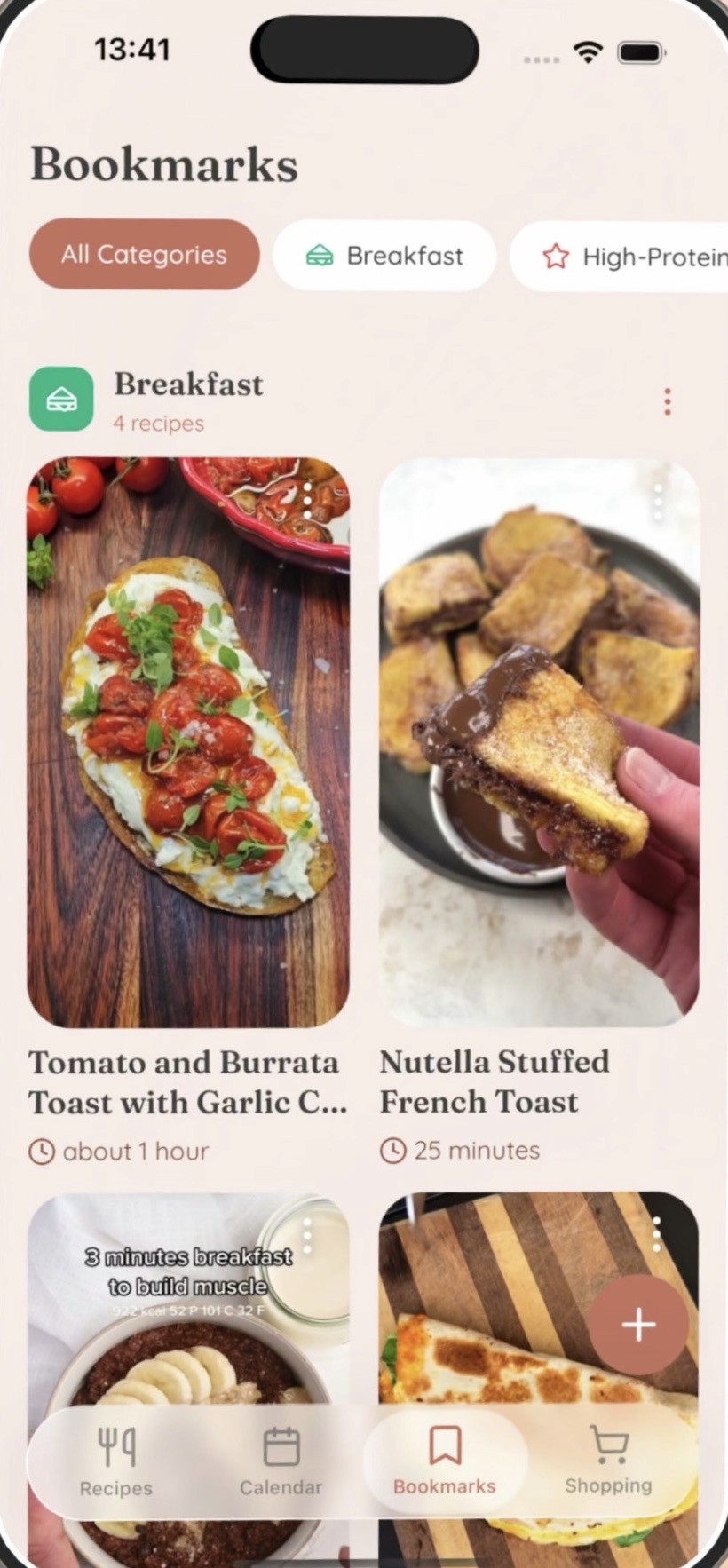
Whisk
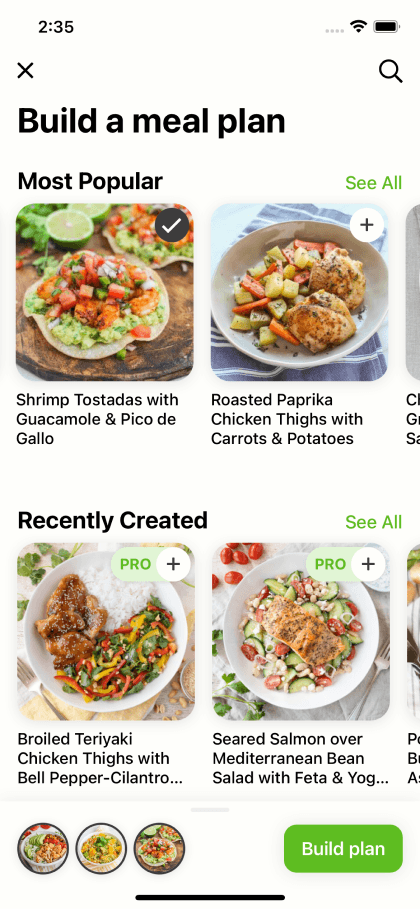
Mealime
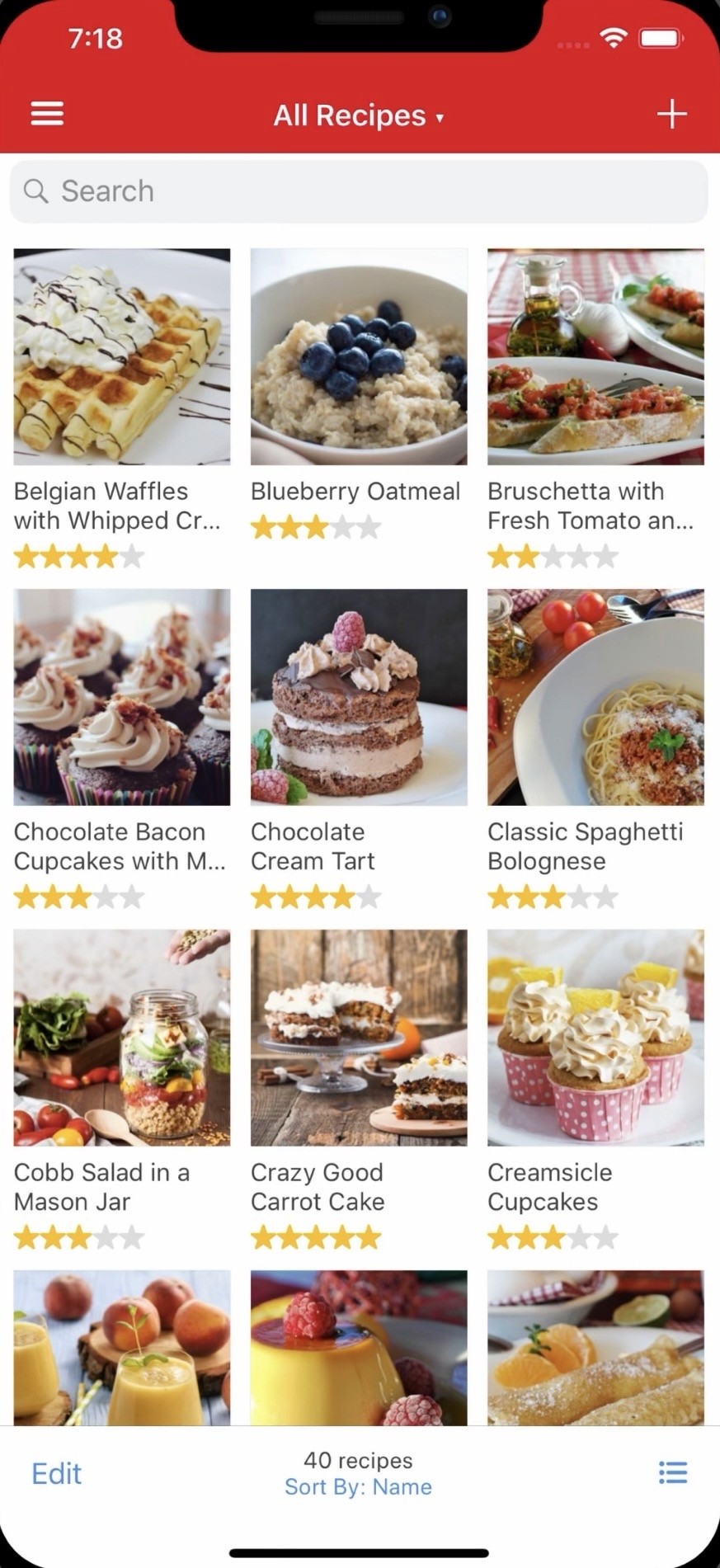
Paprika Recipe Manager
Design Strategy
Role Based Permissions
Different family members should have different levels of control.
Approval workflows
Children can suggest activities, but parents approve final scheduling.
Conflict awareness
Overlapping events should be surfaced clearly with simple resolution options.
Lightweight collaboration
The system should feel simple enough for daily use without overwhelming users.
Solution
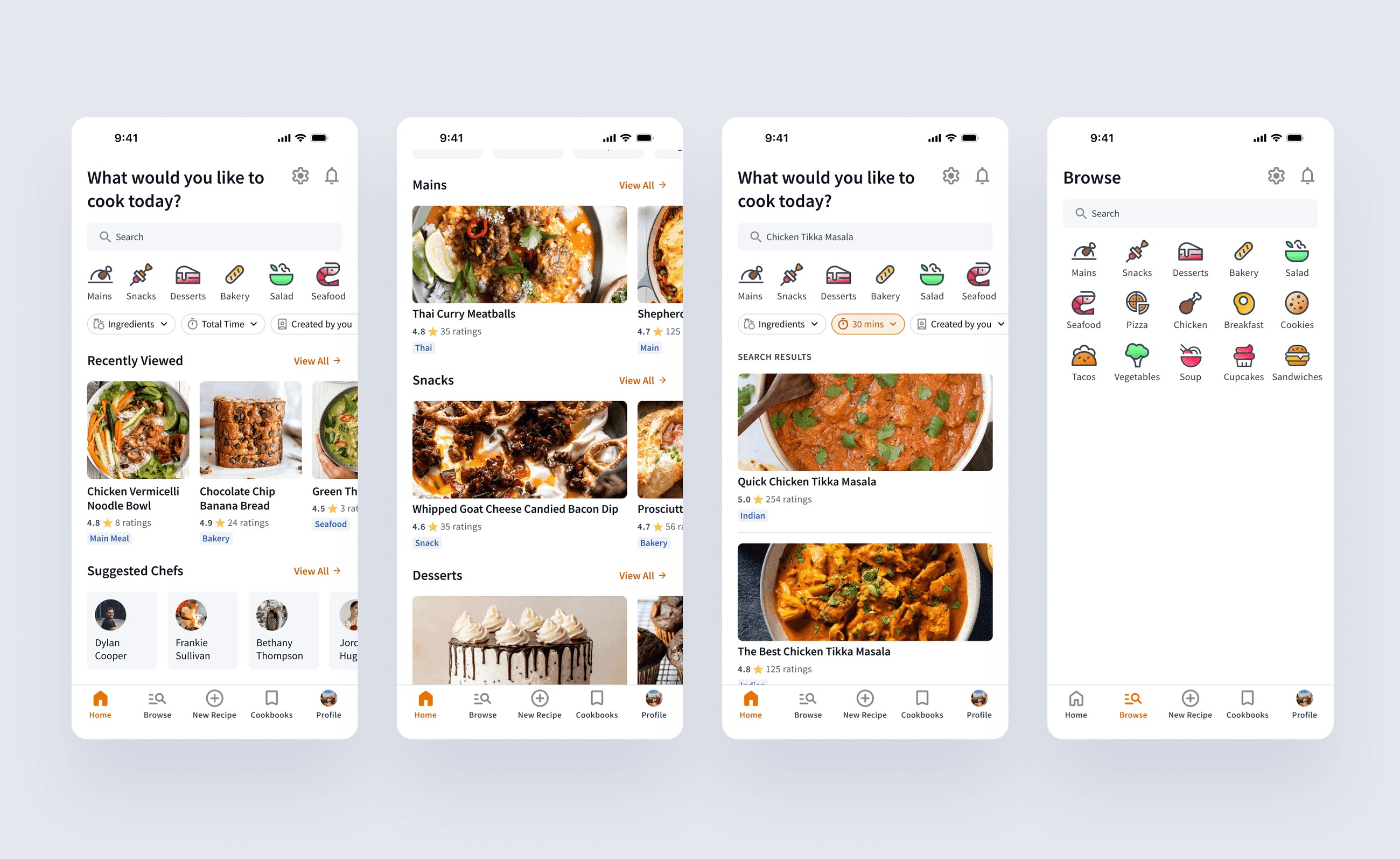
Home & Browse
Enables discovery and quick re-entry into the cooking flow
Surfaces recipes by meal type to reduce decision fatigue
Allows users to quickly filter by time, ingredients, or cuisine
Brings back recently viewed recipes to support continuity
Introduces new content through personalized chef recommendations
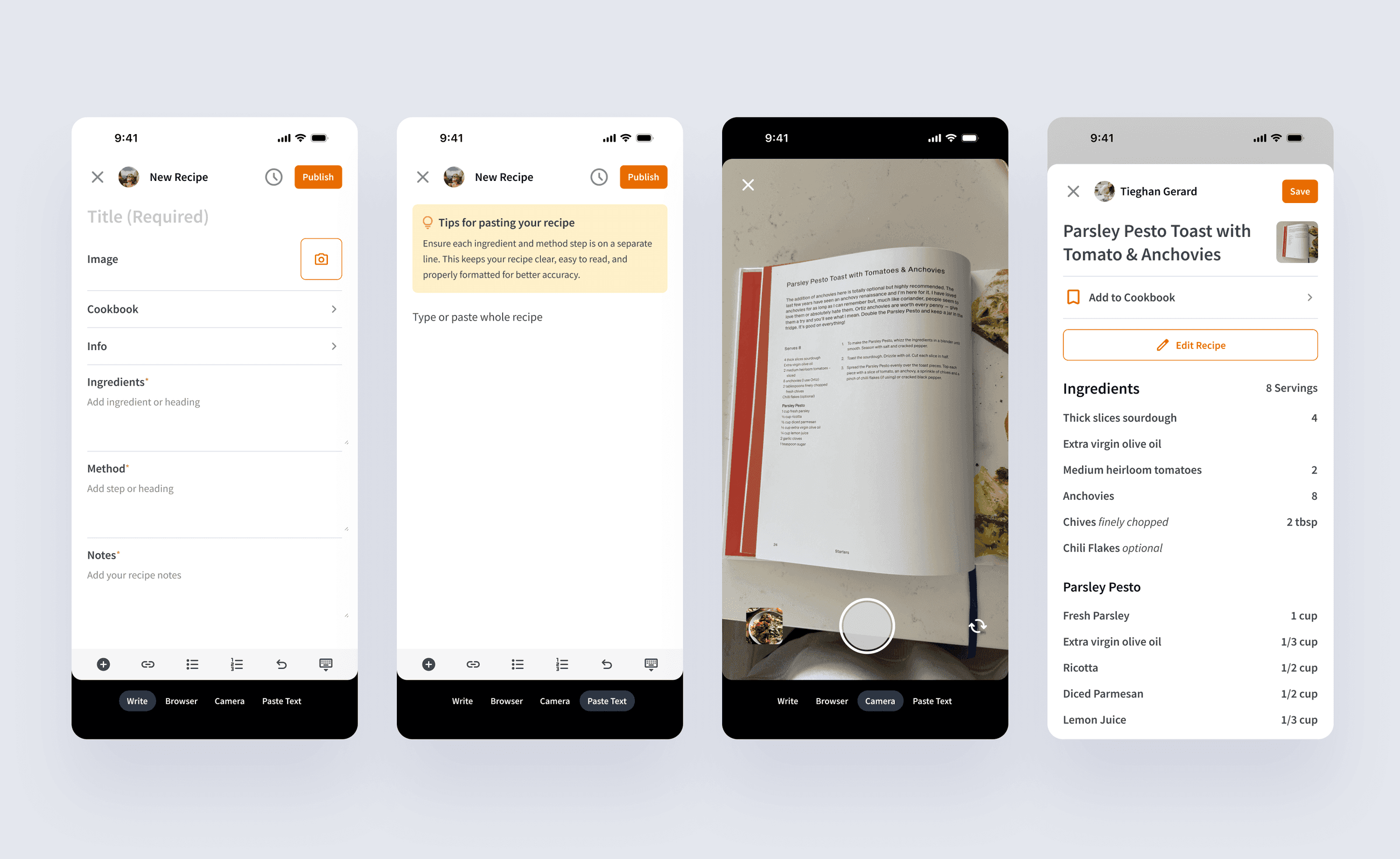
Create Recipe
Removes friction from capturing recipes
Supports multiple input methods (manual, copy/paste, photo)
Structures recipes automatically while allowing flexibility
Allows users to document and personalize their cooking over time
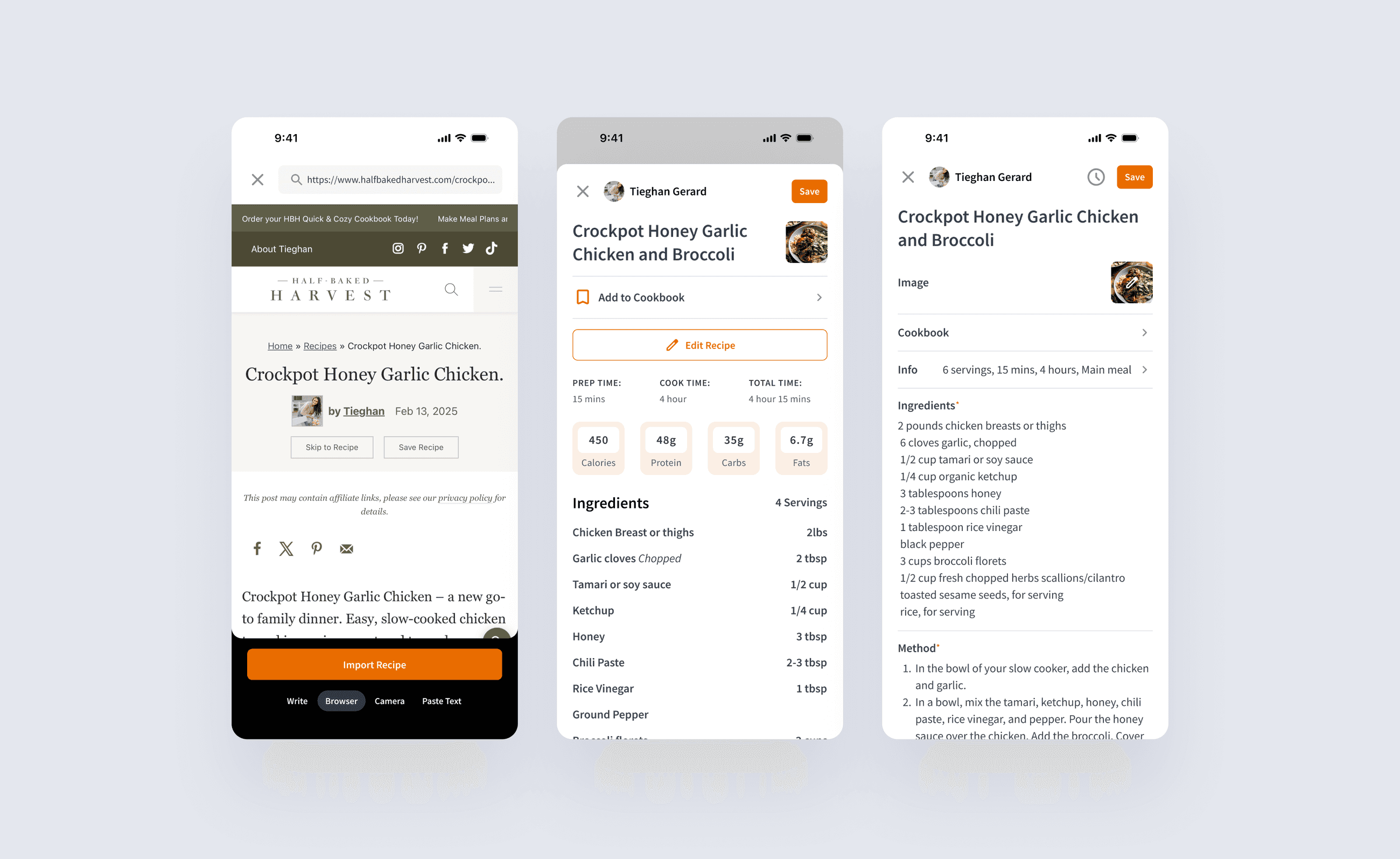
Import from Browser
Bridges external content into the system
Extracts recipes directly from websites with minimal effort
Automatically structures and saves key information
Allows users to customize and categorize before saving
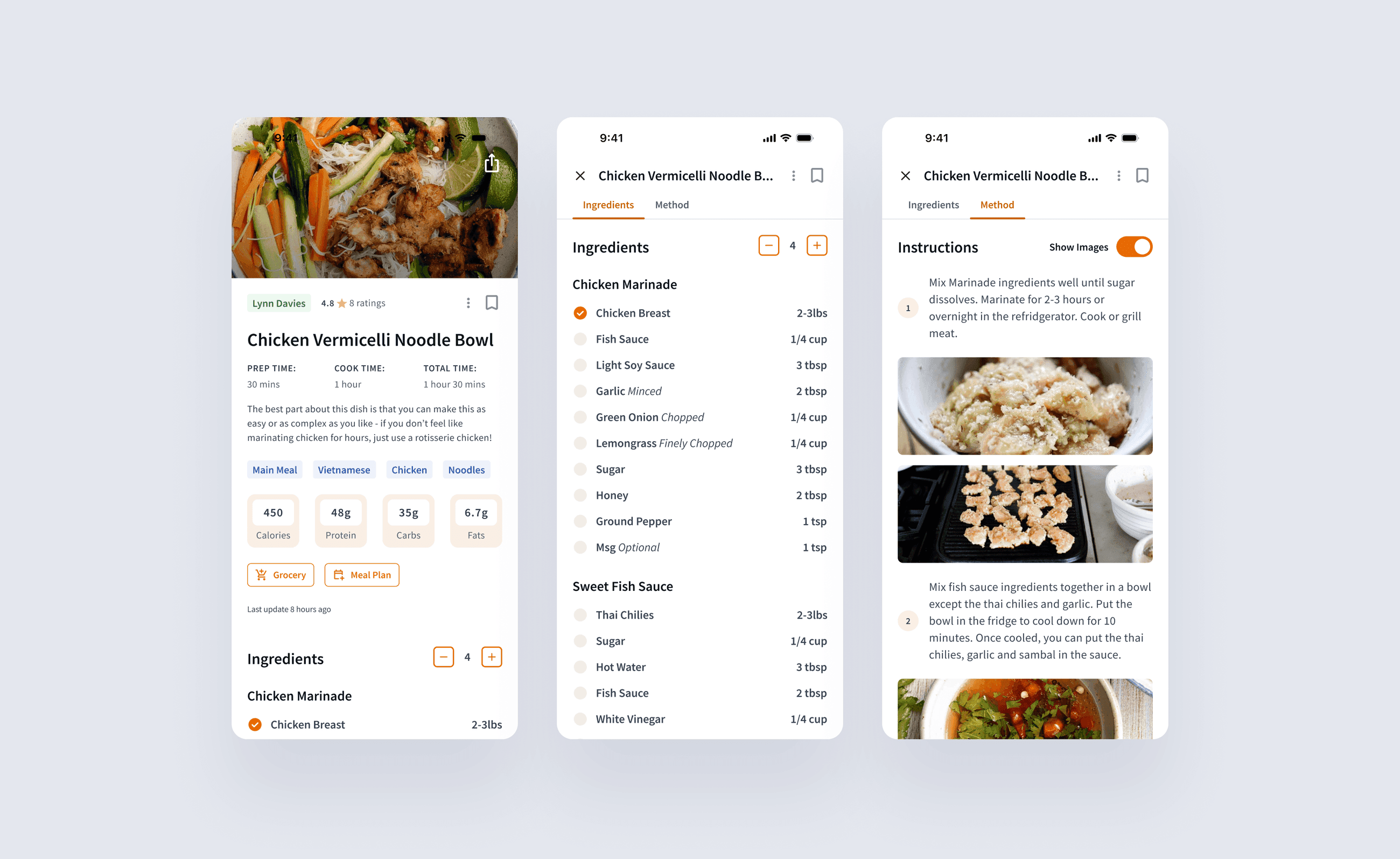
Recipe Page
Supports execution in the moment
Presents ingredients and steps in a clear, scannable format
Prioritizes readability and ease of use while cooking
Keeps users focused without unnecessary distractions
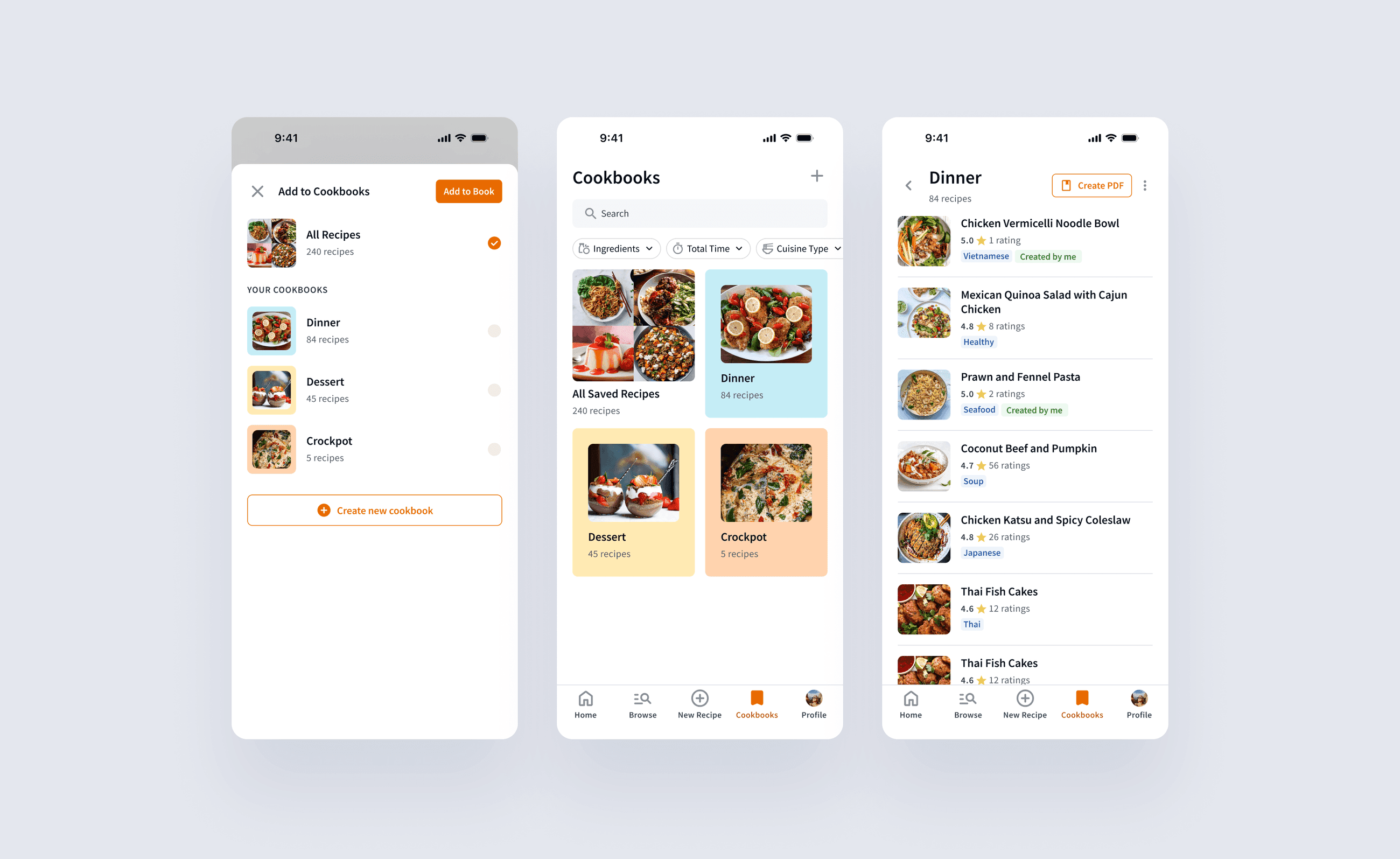
Cookbooks
Enables organization at scale
Allows users to group recipes into personalized collections
Makes it easy to revisit, manage, and curate recipes over time
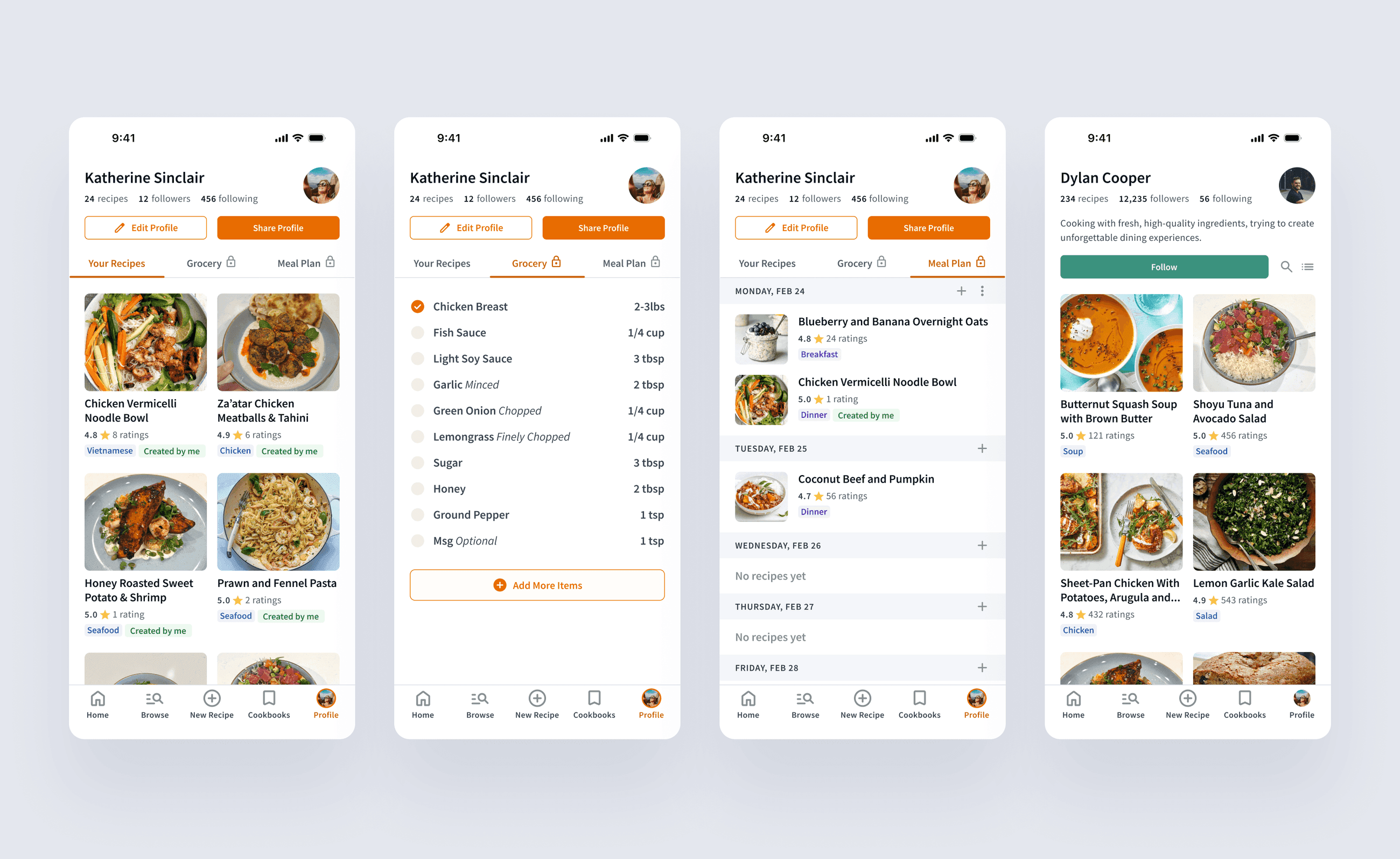
Profile & Planning
Acts as the control center for ongoing use
Enables weekly meal planning with drag-and-drop flexibility
Automatically generates and organizes grocery lists
Supports real-time interaction (checking off items while shopping)
Introduces social features like sharing and following
Outcomes & Learnings
Workflow first design > feature-first design
Connecting actions across the journey created more value than optimizing individual features
Flexibility increases adoption
Supporting multiple input methods removes barriers to entry
Planning drives retention
Weekly meal planning acts as a natural engagement loop
Community unlocks scale
User generated content introduces long term growth potential
If I had more time…
This product lays the foundation for a more intelligent, adaptive cooking system that evolves with the user and supports them in real time. If I had more time I would
Leverage behavior and preferences to recommend meals, optimize planning, and anticipate needs
Suggest ingredient substitutions and adjustments based on dietary goals, constraints, or available ingredients
Enable cookbooks, planning, and shopping across families or groups
Explore voice interfaces to support users while cooking, without disrupting flow
Investigate AR to provide step-by-step assistance directly within the cooking environment
What this says about me
I approach design as a systems problem, not just a feature exercise. I focus on how individual interactions connect into a cohesive, end-to-end experience. I prioritize reducing friction, shaping repeatable behaviors, and aligning user needs with long-term product value. My work balances structure and flexibility, with an emphasis on creating scalable foundations that can evolve with the product.
Final Thought
This project reflects a shift from designing isolated tools to designing connected experiences. By unifying the cooking journey into a single system, the product moves beyond task completion to support consistency, habit formation, and long term engagement.



" height="512px" id="xSuhzR5c2" width="512px"/><path d="M 128 256 C 198.692 256 256 198.692 256 128 C 256 57.308 198.692 0 128 0 C 57.308 0 0 57.308 0 128 C 0.148 198.631 57.369 255.852 128 256 Z M 128 232.691 C 106.784 232.717 86.074 226.214 68.682 214.063 C 87.705 186.957 114.65 166.402 145.819 155.217 C 153.19 178.611 157.846 202.776 159.697 227.234 C 149.478 230.683 138.784 232.524 128 232.691 Z M 181.895 217.263 C 179.649 194.049 175.033 171.125 168.118 148.851 C 188.709 144.742 209.91 144.742 230.501 148.851 C 224.529 177.427 206.914 202.219 181.895 217.263 Z M 232.421 125.642 C 208.503 121.23 183.949 121.585 160.168 126.686 C 157.204 119.074 154.038 111.596 150.535 104.185 C 171.23 91.757 189.288 75.392 203.688 56.017 C 221.594 74.843 231.839 99.667 232.421 125.642 Z M 128 23.309 C 148.619 23.262 168.786 29.347 185.937 40.792 C 173.556 57.903 157.934 72.415 139.958 83.503 C 128.77 63.501 115.565 44.697 100.547 27.385 C 109.475 24.808 118.708 23.437 128 23.309 Z M 77.912 36.581 C 93.759 54.155 107.599 73.44 119.175 94.08 C 89.882 106.583 57.535 110.1 26.24 104.185 C 33.085 75.337 51.871 50.758 77.912 36.581 Z M 55.781 130.897 C 81.32 130.812 106.56 125.397 129.886 114.998 C 132.817 121.128 135.444 127.158 137.937 133.524 C 103.079 145.994 72.815 168.73 51.133 198.737 C 33.258 179.518 23.318 154.247 23.309 128 C 34.058 129.655 44.907 130.578 55.781 130.762 Z" fill="rgb(255, 255, 255)" height="256px" id="yz5C7HgZH" transform="translate(128 128)" width="256px"/></g></g></svg>)
" height="512px" id="ODVqMaewa" width="512px"/><g d="M 69.929 34.931 C 69.943 49.078 61.429 61.84 48.361 67.26 C 35.293 72.681 20.246 69.692 10.242 59.688 C 0.238 49.684 -2.751 34.637 2.669 21.568 C 8.089 8.5 20.851 -0.014 34.999 0 C 54.283 0.019 69.911 15.647 69.929 34.931 Z M 16.607 256 C 11.826 256 7.95 252.124 7.95 247.343 L 7.95 93.103 C 7.95 88.322 11.826 84.446 16.607 84.446 L 53.39 84.446 C 58.172 84.446 62.047 88.322 62.047 93.103 L 62.047 247.343 C 62.047 252.124 58.172 256 53.39 256 Z M 254.35 173.373 L 254.35 248.051 C 254.35 252.441 250.791 256 246.401 256 L 206.923 256 C 202.533 256 198.974 252.441 198.974 248.051 L 198.974 175.697 C 198.974 164.884 202.106 128.539 170.746 128.539 C 146.426 128.539 141.475 153.533 140.43 164.749 L 140.43 248.219 C 140.34 252.517 136.848 255.965 132.548 256 L 94.35 256 C 92.239 256.009 90.212 255.174 88.719 253.682 C 87.227 252.189 86.392 250.162 86.401 248.051 L 86.401 92.429 C 86.392 90.315 87.226 88.285 88.717 86.787 C 90.209 85.288 92.236 84.446 94.35 84.446 L 132.548 84.446 C 134.689 84.41 136.754 85.235 138.281 86.736 C 139.807 88.237 140.667 90.289 140.666 92.429 L 140.666 105.903 C 149.694 92.429 163.1 81.92 191.63 81.92 C 254.721 81.886 254.35 140.935 254.35 173.373 Z" fill="transparent" height="256.00007702350763px" id="ijXxm5OgS" transform="translate(128.807 128)" width="254.35054327352088px"><path d="M 69.929 34.931 C 69.943 49.078 61.429 61.84 48.361 67.26 C 35.293 72.681 20.246 69.692 10.242 59.688 C 0.238 49.684 -2.751 34.637 2.669 21.568 C 8.089 8.5 20.851 -0.014 34.999 0 C 54.283 0.019 69.911 15.647 69.929 34.931 Z" fill="rgb(255, 255, 255)" height="69.92944321850571px" id="s2hvQbaZZ" transform="translate(0 0)" width="69.92944321850572px"/><path d="M 8.657 171.554 C 3.876 171.554 0 167.678 0 162.897 L 0 8.657 C 0 3.876 3.876 0 8.657 0 L 45.44 0 C 50.221 0 54.097 3.876 54.097 8.657 L 54.097 162.897 C 54.097 167.678 50.221 171.554 45.44 171.554 Z" fill="rgb(255, 255, 255)" height="171.5536842105263px" id="S5MPGmwH9" transform="translate(7.95 84.446)" width="54.096842105263164px"/><path d="M 167.95 91.453 L 167.95 166.131 C 167.95 170.521 164.39 174.08 160 174.08 L 120.522 174.08 C 116.132 174.08 112.573 170.521 112.573 166.131 L 112.573 93.777 C 112.573 82.964 115.705 46.619 84.345 46.619 C 60.025 46.619 55.074 71.613 54.03 82.829 L 54.03 166.299 C 53.939 170.597 50.447 174.045 46.147 174.08 L 7.95 174.08 C 5.838 174.089 3.811 173.254 2.318 171.762 C 0.826 170.269 -0.009 168.242 0 166.131 L 0 10.509 C -0.009 8.395 0.825 6.365 2.316 4.867 C 3.808 3.368 5.835 2.526 7.95 2.526 L 46.147 2.526 C 48.288 2.49 50.353 3.315 51.88 4.816 C 53.406 6.317 54.266 8.369 54.265 10.509 L 54.265 23.983 C 63.293 10.509 76.699 0 105.23 0 C 168.32 -0.034 167.95 59.015 167.95 91.453 Z" fill="rgb(255, 255, 255)" height="174.0800864839568px" id="PbgTI7r9W" transform="translate(86.401 81.92)" width="167.94959570272007px"/></g></g></g></svg>)